Across recent months, a pattern has become increasingly clear in conversations with designers, retailers, photographers, educators, investors and policymakers across the North of England: the challenges facing the Northern creative industries are not isolated problems — they are systemic ones.
They cut across fashion, media, retail, education, property, infrastructure and investment.
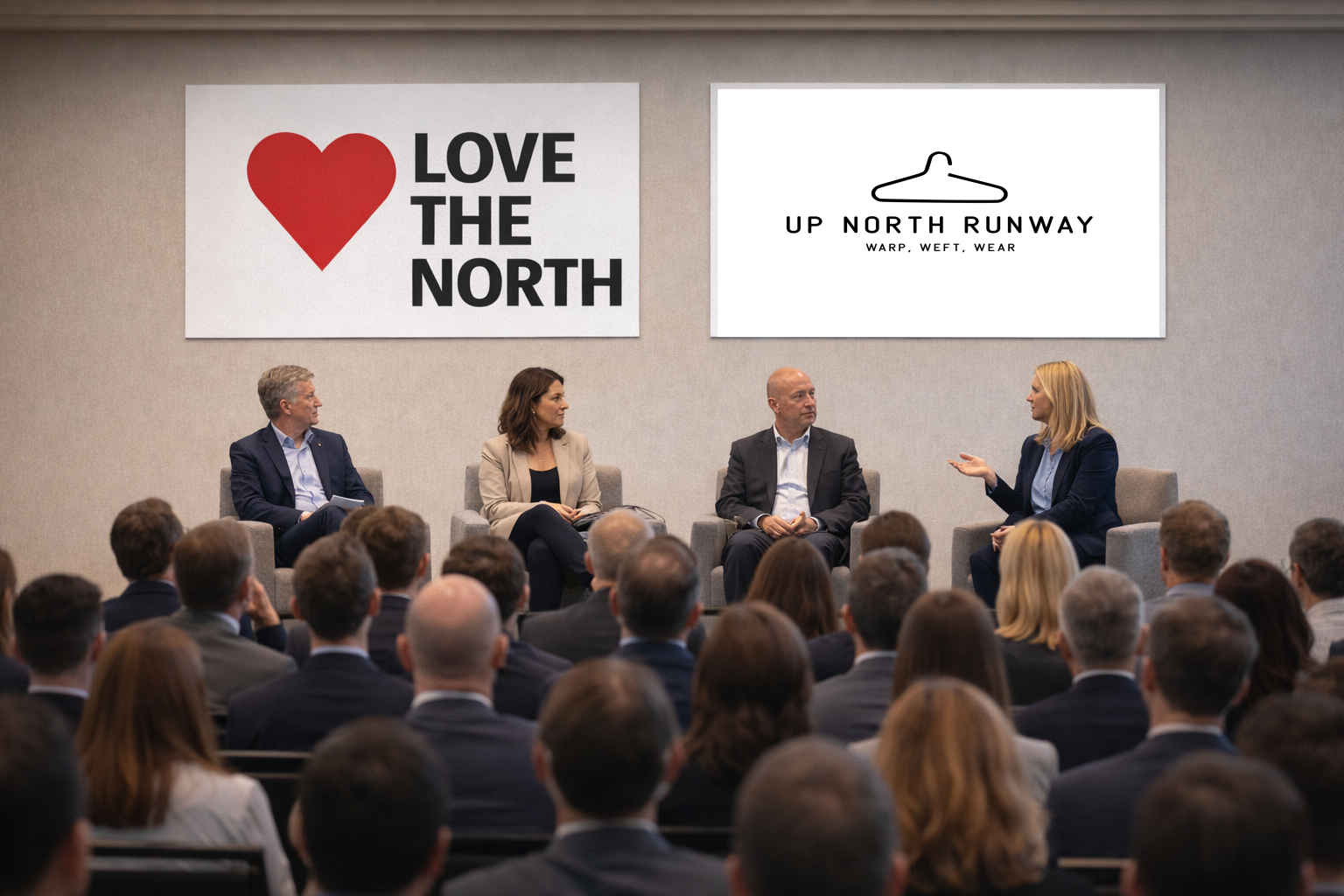
If the North is serious about building a sustainable, globally visible creative economy — particularly in fashion — then the next step is not another strategy document or pilot scheme. It is bringing the right people into the same room, with the explicit purpose of aligning assets, incentives and long-term intent.
This article sets out the case for a pan-Northern creative industries conference — and, critically, who needs to be there for it to matter.
Why a Conference — and Why Now?
Conferences often get a bad reputation: too much talking, too little action. But that usually happens when events are framed as showcases or networking exercises rather than strategic interventions.
The North’s creative industries are at an inflection point. We have:
- world-class creative talent
- globally recognised cultural heritage
- under-utilised physical assets (mills, warehouses, civic buildings)
- strong educational institutions
- clear international appetite for Northern culture
What we do not yet have is a joined-up mechanism for aligning these strengths across regions and sectors.
A pan-Northern conference, properly structured, is not about speeches. It is about coordination. About building shared understanding. And about identifying where collaboration — rather than competition — unlocks the most value.
The Core Question the Conference Must Address
At its heart, the conference should be organised around one central question:
How do we turn the North’s creative talent and heritage assets into sustained economic activity — rather than one-off success stories?
Everything else flows from that.
Which Sectors Need to Come Together — and Why
For such a conference to be meaningful, it must move beyond the creative industries talking to themselves. The real work happens at the intersections.
Below are the key sectors that must be represented, and the role each plays in solving the wider challenge.
1. Creative Practitioners (Fashion First, But Not Fashion Alone)
This includes:
- fashion designers
- garment makers and manufacturers
- photographers and videographers
- stylists and creative directors
- independent retailers and boutique owners
These voices ground the conversation in reality. They understand the economics of making, selling and sustaining creative work. Without them, policy discussions risk becoming abstract.
Fashion in particular sits at the intersection of design, manufacturing, retail, tourism and culture — making it an ideal lens through which to explore wider creative-industry challenges.
2. Education and Skills Providers
Universities, colleges and specialist training providers are central to the North’s creative pipeline.
They need to be part of the conversation not simply as talent producers, but as partners in shaping viable career pathways. This includes:
- fashion and textiles departments
- creative technology programmes
- business and entrepreneurship faculties
- careers and industry liaison teams
A pan-Northern discussion must ask whether current educational outputs align with realistic employment and enterprise opportunities — and how closer integration with industry could improve outcomes.
3. Local and Regional Government
This includes:
- regional mayors and combined authorities
- local councils
- economic development teams
- cultural and regeneration leads
Politicians are not there to dictate creative direction — but they do control the levers that shape outcomes: planning, property strategy, infrastructure, funding priorities and convening power.
Their presence signals seriousness and creates the conditions for long-term alignment beyond individual projects.
4. Property Owners and Developers (Often Missing, Always Crucial)
Too often, conversations about creative regeneration happen without those who control the spaces in which it must occur.
This sector includes:
- owners of mills, warehouses and industrial buildings
- regeneration-focused developers
- asset managers with long-term holdings
Creative industries need affordable, flexible, characterful space. Property owners need viable, long-term occupancy and purpose. The overlap is obvious — but it only works if both sides are in the room early.
5. Investors and Funders
This is not about venture capital chasing fast exits. It is about patient capital, strategic investment and long-term value creation.
Relevant voices include:
- regional investment funds
- philanthropic investors
- family offices
- cultural and heritage funders
- private individuals with an interest in Northern assets
The North already attracts significant global investment through sport and property. A pan-Northern creative strategy should ask how some of that appetite can be channelled into cultural and creative infrastructure.
6. Tourism and Place-Marketing Bodies
Creative industries and tourism are deeply linked — especially fashion, which thrives on storytelling, place and experience.
This sector brings expertise in:
- international promotion
- destination branding
- visitor economies
- cultural narratives
If the North is serious about monetising its creative and heritage assets, tourism and place-marketing bodies must be part of the strategic conversation — not an afterthought.
Why This Must Be Pan-Northern, Not City-by-City
One of the recurring weaknesses in Northern development has been fragmentation.
Cities compete for funding, attention and recognition — often duplicating efforts and diluting impact. Yet from an international perspective, the distinctions between Leeds, Manchester, Liverpool, Sheffield, Newcastle or Hull matter far less than the collective proposition they could offer together.
A pan-Northern conference creates the opportunity to:
- identify complementary strengths across regions
- reduce duplication of effort
- align messaging and promotion
- create business and knowledge clusters to drive innovation and competition
- build networks that extend beyond administrative boundaries
This is not about erasing local identity — it is about amplifying it through collaboration.
What Success Would Look Like
A successful conference would not end with a communiqué or a press release. Instead, it would aim to:
- establish shared principles for creative-industry development
- identify priority assets and opportunities across the North
- agree areas where collaboration delivers clear advantage
- create working groups that persist beyond the event
- set a direction unconstrained by electoral cycles
In short, it would shift the conversation from what’s wrong to what we are prepared to build together.
Why This Matters for Fashion — Specifically
Fashion often reveals structural issues before other sectors because it is:
- capital-intensive
- margin-sensitive
- dependent on space, networks and visibility
- deeply tied to place and culture
If the North can build an ecosystem where fashion designers can train, produce, sell and grow without being forced south or overseas, it is a strong signal that the wider creative economy is working.
A Conversation That Needs to Happen
This article does not propose a finished solution. It proposes a necessary conversation.
If the North is to move beyond piecemeal regeneration and short-term initiatives, then the people who shape education, property, investment, culture and creativity must be prepared to think and plan together.
A pan-Northern creative industries conference is not the end goal — but it may be the most effective place to begin.
The question is no longer whether collaboration is desirable. It is whether we are willing to organise for it.